Overview
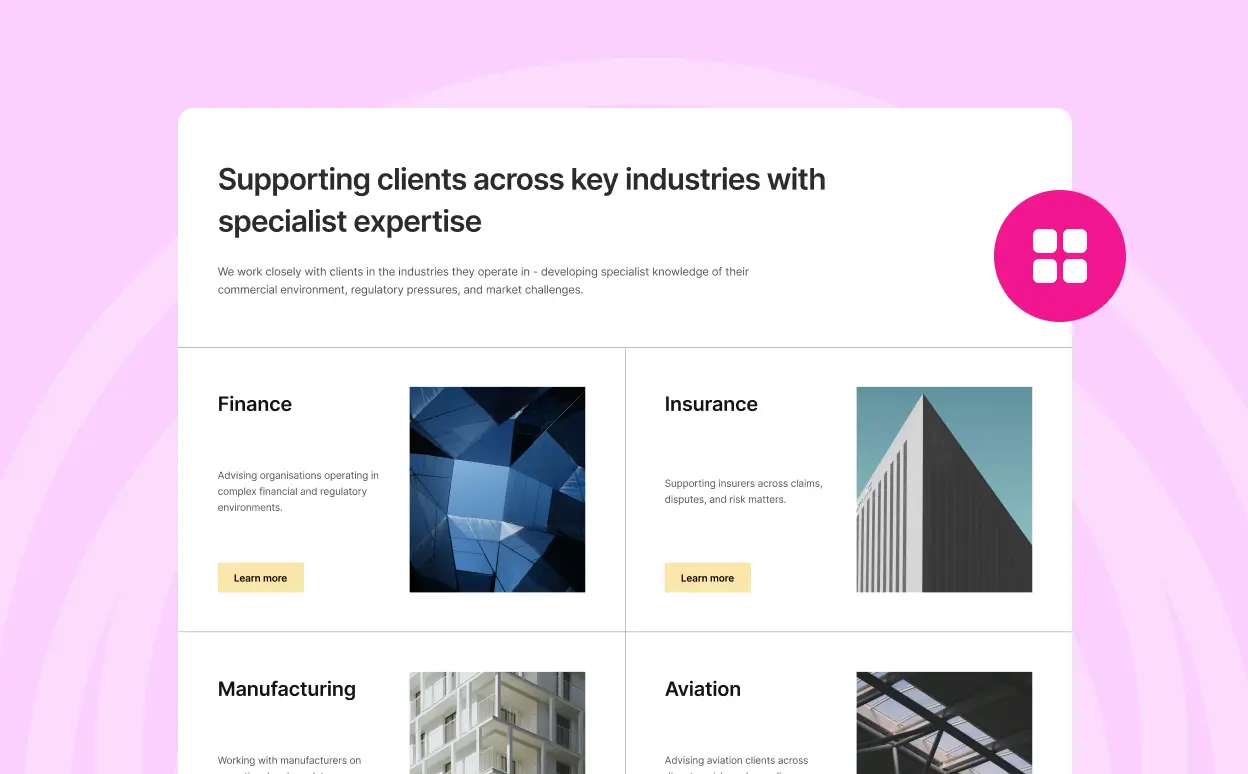
Industry pages tell prospects you work with people like them. A manufacturing business owner landing on a dedicated manufacturing page thinks: these people get my industry. That recognition builds confidence and increases the likelihood they’ll reach out. But thin industry pages – a paragraph with nothing to back it up – signal the opposite: a firm claiming expertise it can’t demonstrate.
Industry pages help prospects see you understand their world. A manufacturing business owner landing on a page dedicated to manufacturing clients thinks: these people get my industry. A healthcare provider sees a healthcare page and knows you’ve dealt with the specific challenges they face.
That recognition matters. It’s a signal that you work with people like them – not just that you’re a lawyer who could theoretically help.
But industry pages only work if you do them properly. A laundry list of every industry your firm has ever touched isn’t a signal of expertise. It’s a signal you’re trying to be everything to everyone. Twenty industry pages with a paragraph each tells prospects nothing useful.
The question isn’t whether to have industry pages. It’s how many, and how deep.
Why Do Industry Pages Matter for Law Firm Websites?
Prospects and referrers often think in industry terms.
A business owner in manufacturing isn’t just looking for a commercial lawyer. They’re wondering: does this firm understand manufacturing? Do they know about supply chain contracts, equipment financing, workplace safety in a factory environment? Have they worked with businesses like mine?
A referrer making an introduction might say: “She’s great for property developers” or “They do a lot of work with medical practices.” Industry is often the frame.
Industry pages meet prospects and referrers where they are. They answer the unspoken question – do you work with people like me? – before the prospect has to ask.
When someone lands on an industry page that reflects their world, they feel recognised. That’s a different experience from landing on a generic practice area page and hoping you’ll understand their context. Recognition builds confidence. Confidence leads to contact.
How Many Industry Pages Should a Law Firm Have?
Better to have two or three strong industry pages than twenty thin ones.
A page with genuine depth – experience, testimonials, named lawyers, relevant content – signals real expertise. A page with a paragraph and nothing to back it up signals the opposite.
Focus on industries where you have genuine depth and want to build further. Let the others go.
What About Prospects in Other Industries?
A common concern: if we list specific industries, will prospects outside those industries feel excluded? Will a retail business be turned off if they don’t see a retail page?
In practice, this rarely happens.
Prospects understand that listing certain industries doesn’t mean you only work with those industries. A business owner in retail who lands on your site, sees strong industry pages for manufacturing and healthcare, and reads your general commercial law content will likely conclude: these people work with serious businesses and have deep experience in some sectors. That’s not a turn-off – it’s a credibility signal.
What does turn prospects off is claiming to specialise in everything. A site listing every industry imaginable looks like it’s trying too hard. A site with a focused set of well-developed industry pages looks like it knows what it’s good at.
The risk isn’t that you’ll exclude prospects by being specific. The risk is that you’ll fail to attract anyone by being generic.
What Should a Law Firm Industry Page Include?
An effective industry page isn’t just a statement that you work with an industry. It’s evidence.
The specific challenges or legal needs of that industry
What keeps people in this industry up at night? What are the legal issues they commonly face? This shows you understand their world – not just that you’ve heard of their sector. A manufacturing page might mention supply agreements, equipment leasing, workplace safety, and succession planning for family-owned operations. A healthcare page might address regulatory compliance, practitioner contracts, and practice acquisitions.
Your relevant experience
Matters you’ve handled, clients you’ve worked with (if nameable), outcomes you’ve achieved. This is where work examples come in – specific deals, transactions, disputes that demonstrate you’ve done this before. A page claiming healthcare expertise needs healthcare experience to back it up.
Testimonials from clients in that industry
A testimonial from a manufacturing client on your manufacturing page is more powerful than a generic testimonial elsewhere on the site. It tells the prospect: someone in my industry trusted these people and was happy with the result.
Lawyers who specialise in that sector
Which lawyers in your firm have the most experience with this industry? List them, link to their profiles, and identify a primary contact point. Prospects want to know who they’d be working with – not just that the firm has capability somewhere.
Content and insights relevant to that industry
Articles, guides, updates that relate specifically to that sector. Link to them or embed them on the page. This shows ongoing engagement with the industry, not just a static claim of expertise. It also gives prospects a reason to stay on the page and explore further.
The more of these elements you include, the stronger the page. A page with all five signals genuine depth. A page with just a paragraph of text signals you added the industry to a list.
Which Industry Pages Should You Build?
Industry pages work when they show you understand the client’s world – not just that you’ve heard of their industry.
If you have genuine depth in an industry – experience, clients, testimonials, lawyers who know the sector – build the page. Make it substantive. Give prospects a reason to believe you’re the right choice for someone in their position.
If you can’t back it up, don’t bother. A thin industry page does more harm than good. Better to have no page than one that raises expectations you can’t meet.
Build the ones you can back up. Let prospects in those industries see themselves reflected in your site. That recognition is what turns interest into contact.